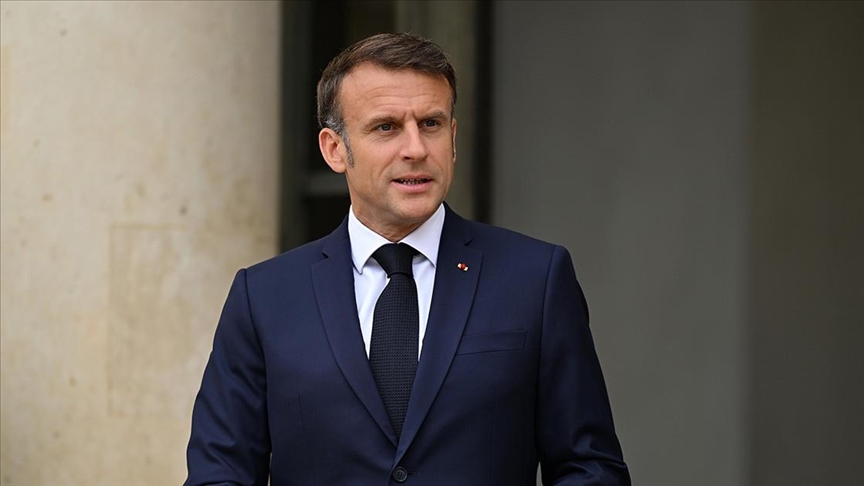
Macron Says Europe Will Stand Firm Against Sovereignty Threats in Ukraine and Greenland
French President Emmanuel Macron has sent a strong and carefully worded message to the global stage, declaring that Europe will not be intimidated or pressured when it comes to defending its sovereignty. Speaking amid rising geopolitical tensions, Macron emphasized that threats, whether direct or indirect, will not weaken Europe’s resolve in protecting its territorial integrity, specifically referencing Ukraine and Greenland. His statement reflects growing concerns across European capitals about security, influence, and the reshaping of global power dynamics.
At the heart of Macron’s message is the ongoing war in Ukraine, which has become a defining test of Europe’s unity and strategic independence. Since Russia’s invasion, Ukraine’s sovereignty has been under constant threat, and European nations have played a central role in supporting Kyiv through military aid, economic sanctions against Moscow, and diplomatic backing. Macron reiterated that Europe’s support for Ukraine is not just about one country, but about defending the principle that borders cannot be changed by force. According to him, allowing intimidation to succeed in Ukraine would set a dangerous precedent for the entire continent.
Beyond Eastern Europe, Macron’s mention of Greenland drew significant attention. Greenland, an autonomous territory within the Kingdom of Denmark, has recently become a focal point in global geopolitical discussions due to its strategic location in the Arctic and its vast natural resources. Increased interest from global powers has raised fears in Europe about sovereignty, influence, and security in the Arctic region. By explicitly naming Greenland, Macron signaled that Europe is closely watching developments there and will not tolerate actions that undermine European territorial integrity or political autonomy.
Macron’s remarks also reflect a broader European push toward what leaders describe as “strategic autonomy.” This concept focuses on Europe’s ability to defend itself, make independent decisions, and reduce over-reliance on external powers for security, energy, and critical technologies. In recent years, events such as the Ukraine war, energy supply shocks, and global trade tensions have reinforced calls for Europe to strengthen its defense capabilities and political cohesion. Macron has been one of the strongest advocates of this idea, urging European nations to act more decisively together.
The timing of Macron’s statement is equally important. Europe is currently navigating a complex global environment marked by conflicts, economic uncertainty, and shifting alliances. Relations between major powers are increasingly strained, and smaller regions with strategic importance, such as the Arctic, are becoming arenas for competition. By asserting Europe’s readiness to defend its sovereignty, Macron aims to reassure European citizens while also sending a clear signal to external actors that Europe is not passive or divided.
Reactions across Europe have largely aligned with Macron’s position. Several European leaders have echoed similar sentiments in recent weeks, stressing the importance of unity and collective defense. The European Union and NATO continue to coordinate closely on security matters, particularly concerning Ukraine. At the same time, discussions around Arctic security and climate-related challenges in Greenland are gaining momentum, highlighting the region’s growing importance to Europe’s future.
However, Macron’s stance is not without challenges. Maintaining unity among European countries, each with its own political priorities, economic pressures, and public opinions, remains a complex task. Defense spending, military coordination, and foreign policy alignment continue to spark debate within the EU. Critics argue that strong rhetoric must be matched with concrete action, including sustained investment in defense and clearer long-term strategies for regions like Eastern Europe and the Arctic.
From an InfoJet perspective, Macron’s declaration underscores a critical moment for Europe. It shows a continent increasingly aware of its vulnerabilities but also more determined to protect its values, borders, and influence on the global stage. The emphasis on Ukraine highlights Europe’s commitment to international law and sovereignty, while the reference to Greenland signals that no region, no matter how remote, is outside Europe’s strategic vision.
As global tensions continue to evolve, Macron’s message may shape upcoming diplomatic and security decisions across Europe. Whether through increased defense cooperation, stronger political coordination, or clearer policies on strategic regions, Europe appears poised to assert itself more confidently. What remains to be seen is how this resolve will translate into action, and how other global powers will respond.
For now, Macron’s words send a clear message, Europe intends to stand firm, resist intimidation, and defend its sovereignty wherever it is challenged. InfoJet will continue to monitor developments around Ukraine, Greenland, and Europe’s evolving security posture as the situation unfolds.
Reporter: Onyeka Evans
About the Author


