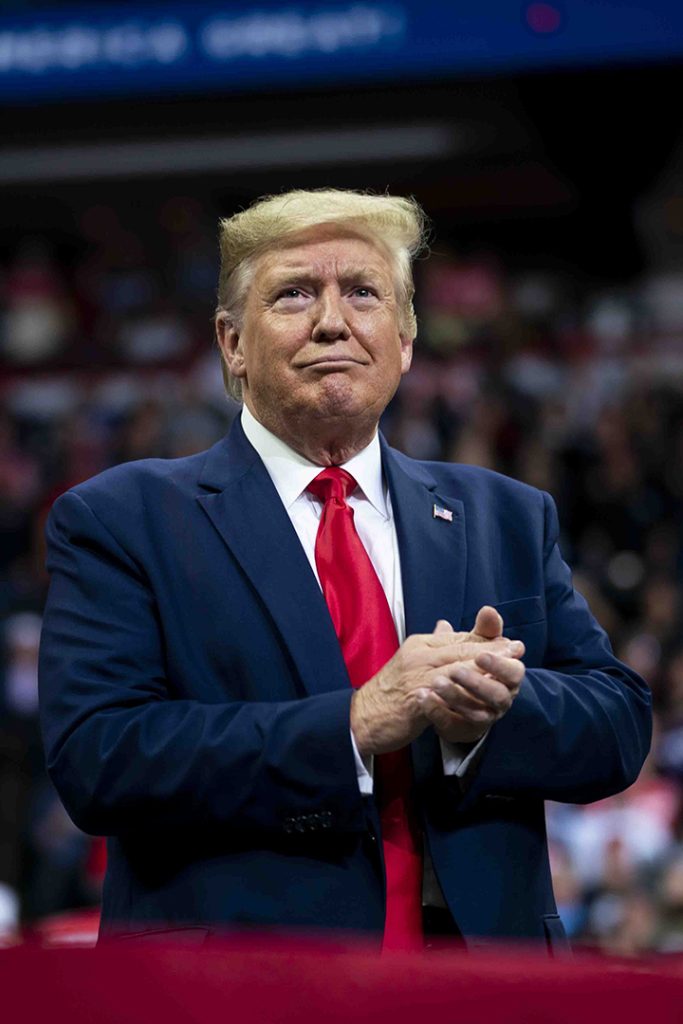
United States President Donald Trump against major European economies.
Reporter: Onyeka Evans
Global stock markets are once again under intense pressure following fresh tariff threats issued by United States President Donald Trump against major European economies. The statement has reignited fears of a renewed global trade war, unsettling investors and triggering widespread volatility across financial markets worldwide.
The announcement came at a time when markets were already fragile due to slowing global growth, persistent inflation concerns, and tight monetary policies by central banks. As a result, investor confidence weakened sharply, leading to sell offs across equities in Europe, the United States, and Asia.
European stock markets were among the first to react negatively. Major indices recorded declines as traders assessed the possible impact of higher tariffs on exports to the United States. Europe remains heavily dependent on transatlantic trade, and any disruption poses serious risks to economic growth and employment.
Industries closely tied to global trade suffered the most. Automotive manufacturers, industrial firms, luxury goods companies, and machinery producers all faced strong selling pressure. These sectors rely on complex cross border supply chains, making them particularly vulnerable to trade restrictions.
Banking stocks in Europe also declined as concerns grew about slower economic activity and reduced corporate earnings. Financial institutions are often sensitive to economic uncertainty, especially when it threatens business investment and consumer spending.
In the United States, stock markets also showed signs of weakness despite the country being the source of the tariff threats. Investors understand that trade conflicts rarely benefit any economy. Higher tariffs often result in increased production costs, higher consumer prices, and potential retaliation from affected trading partners.
Market participants fear that European governments could respond with countermeasures, escalating tensions further. A cycle of retaliation could disrupt global supply chains and create uncertainty that weighs heavily on business confidence.
Asian markets were not spared from the global sell off. Major stock indices across the region declined as investors reacted to the worsening global trade outlook. Many Asian economies depend heavily on stable trade relations between major economic powers, making them sensitive to developments between the United States and Europe.
Export driven companies across Asia came under pressure, particularly those involved in manufacturing, electronics, and technology. Investors worried that slower trade between Western economies could reduce global demand for Asian exports.
Beyond equities, other financial markets reflected a growing risk off sentiment. Investors shifted capital toward assets traditionally seen as safer during periods of uncertainty. Gold prices rose as demand increased for the precious metal as a store of value.
Bond markets also attracted increased interest. Government bonds in several developed economies saw yields decline as investors sought stability and capital preservation. This movement signaled growing caution and reduced appetite for risk.
Currency markets reacted in mixed ways. Some safe haven currencies strengthened as traders adjusted their positions. Meanwhile, currencies tied closely to global trade faced pressure amid the uncertain outlook.
At the core of market fears is the potential impact of tariffs on global economic growth. Tariffs increase the cost of imported goods, which can drive inflation higher. This creates challenges for central banks already struggling to balance inflation control with economic growth.
Higher prices reduce consumers purchasing power, leading to lower spending. For businesses, rising costs and uncertain trade policies can discourage investment and expansion plans. Over time, these effects can slow economic activity across multiple regions.
The renewed tariff threats come at a delicate moment for the global economy. Many countries are still recovering from recent economic shocks, while dealing with high interest rates aimed at controlling inflation. Any additional strain on trade could worsen existing vulnerabilities.
European policymakers are closely monitoring developments. The European Union has significant trade exposure to the United States, particularly in sectors such as automobiles, aerospace, agriculture, and industrial goods. Tariffs on these products could have widespread economic consequences.
Political leaders in Europe are expected to consider diplomatic and economic responses. Investors are watching closely for signs of negotiation or compromise, which could help calm markets and restore confidence.
Market analysts note that uncertainty itself is one of the biggest threats to financial stability. Even without immediate policy action, unpredictable trade signals can cause businesses and investors to delay decisions. This hesitation can slow growth and increase market volatility.
Historically, markets have shown heightened sensitivity to trade related headlines. Sudden policy shifts or aggressive rhetoric often lead to rapid price movements, reflecting how interconnected and reactive global financial systems have become.
Some analysts caution that tariff threats do not always result in actual implementation. In previous cases, such statements have been used as leverage in trade negotiations. However, markets cannot afford to ignore the risks, especially when economic conditions are already fragile.
Corporate earnings expectations are also being reassessed. Companies with significant international exposure may face higher costs, reduced demand, or disrupted supply chains if tariffs are introduced. This uncertainty has contributed to declining stock valuations.
Investors are increasingly shifting toward defensive strategies. Sectors considered more stable, such as utilities, healthcare, and consumer staples, have attracted attention as safer options during volatile periods.
Technology stocks have also felt pressure, particularly those with global supply chains or reliance on international markets. The tech sector has been a key driver of market growth in recent years, making its performance especially important to overall market sentiment.
The situation has highlighted the importance of diversification for investors. Political developments can quickly alter market dynamics, underscoring the need to spread risk across asset classes and regions.
Central banks are also paying close attention to the situation. Any escalation in trade tensions could complicate monetary policy decisions. Slower growth combined with rising prices would create difficult trade offs for policymakers.
Economic data releases in the coming weeks will be closely analyzed for signs of stress linked to trade uncertainty. Indicators such as manufacturing activity, export levels, and business confidence surveys may provide early warnings of economic impact.
Global institutions and economic organizations have repeatedly warned that protectionist policies could harm long term growth. Open trade has been a key driver of global economic expansion over recent decades, supporting jobs and innovation.
As global markets digest the latest developments, volatility is expected to remain elevated. Traders are likely to react quickly to new statements or policy signals from political leaders on both sides of the Atlantic.
For now, investors remain cautious, balancing the risk of further market declines against the possibility of diplomatic progress. Any indication of dialogue or compromise could trigger a market rebound.
On the other hand, continued aggressive rhetoric or concrete policy actions could deepen losses and extend market instability. This uncertainty has made the current environment particularly challenging for long term planning.
The renewed trade tensions serve as a reminder of how closely politics and markets are intertwined. Decisions made at the highest political levels can have immediate and far reaching consequences for global financial systems.
As the story continues to unfold, market participants will remain focused on developments in trade policy, economic data, and corporate earnings. The direction of global markets will largely depend on whether tensions escalate or ease in the weeks ahead.
For now, global stocks remain under pressure, reflecting a fragile balance between risk and opportunity in an increasingly uncertain economic landscape.
About the Author


