Space Station Could Be Launched in One Rocket, Startup Says:

A Florida-based space startup has announced a groundbreaking plan to develop a commercial space station that could be fully deployed with a single rocket launch, a concept that could dramatically reduce costs and accelerate the timeline for orbital construction.
Unlike traditional space stations, which are assembled module by module in orbit over multiple launches, this innovative approach aims to simplify deployment, streamline operations, and open new opportunities for commercial and research missions.
According to the company, the proposed single-launch design would allow the station to be launched and operational in half the time of conventional methods, offering a faster path for experiments, manufacturing in microgravity, and testing next-generation spacecraft. The station is expected to accommodate multiple private and public stakeholders, from scientific research teams to space tourism operators, making it a versatile platform for a wide range of orbital activities.
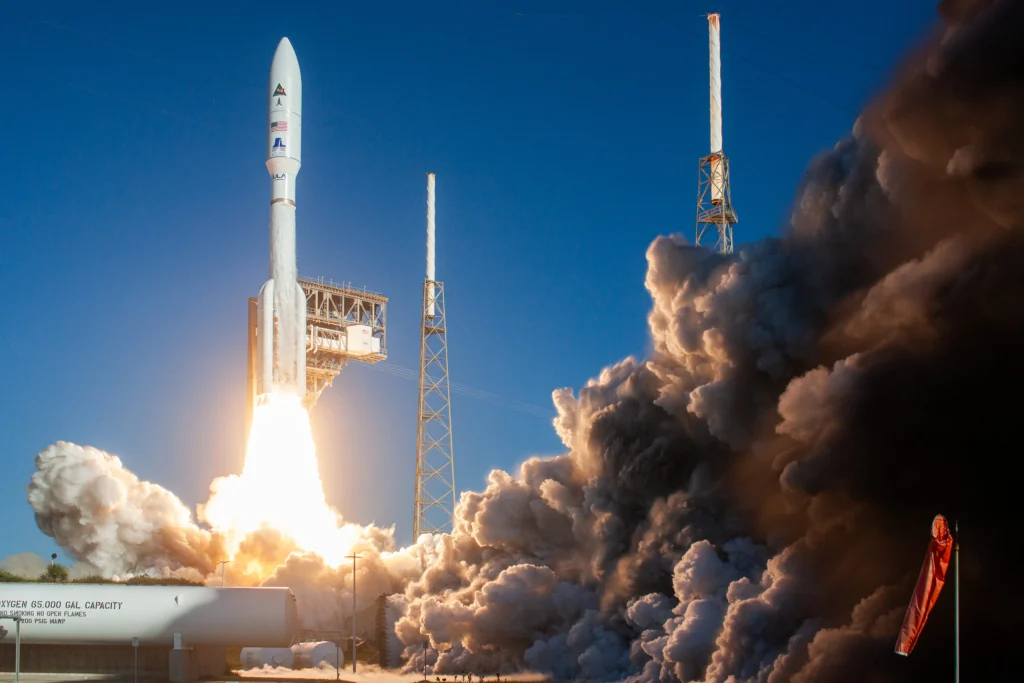
Industry analysts are closely watching the development, noting that if successful, the single-launch space station could revolutionize commercial space operations by significantly lowering the financial and logistical barriers to establishing a permanent presence in orbit. The startup plans to conduct a full-scale prototype test within the next few years, positioning itself as a potential leader in the rapidly growing private space industry.
This announcement comes amid a surge in global interest in commercial space stations, as governments and private companies alike explore ways to capitalize on the expanding low-Earth orbit economy. With ambitious plans and technological innovation at the forefront, the startup’s initiative represents a major milestone in the commercialization and accessibility of space infrastructure.
A new chapter in human spaceflight could be beginning — and it might start with just one rocket launch. A U.S. aerospace startup called Max Space has unveiled plans for a commercial space station named Thunderbird that could be sent into low Earth orbit (LEO) in a single mission aboard SpaceX’s Falcon 9 rocket, upending years of traditional multi-launch assembly for orbital habitats. Gizmodo
Traditionally, space stations such as the International Space Station (ISS) were built piece by piece over many missions, with modules, laboratories, and living quarters launched separately and connected in orbit. By contrast, Thunderbird’s design is a single expandable module that can be fully enclosed for launch and then expanded once in space to create liveable volume — roughly 12,360 cubic feet — without the need for astronauts or robots to piece it together after liftoff. Gizmodo
Max Space’s approach stems from recent shifts in commercial space strategy. NASA’s evolving Commercial Low Earth Orbit Destinations (CLD) program aims to encourage private companies to develop orbital platforms that can succeed the ISS after its planned retirement around 2030. Instead of large fixed-price contracts, NASA is now providing smaller, more flexible Space Act Agreements that reduce risk and cost for startups pursuing innovative designs. This new environment encouraged Max Space to pivot from offering expandable technologies to building a complete station themselves. Gizmodo
The company plans a prototype mission, dubbed Mission Evolution, that could launch as soon as early 2027 on a SpaceX rideshare flight. This test will evaluate critical systems such as orbital debris protection and environmental control and life support — essential capabilities for any long-duration space habitat. Gizmodo
If successful, Thunderbird could host not only astronauts but also researchers and private sector clients conducting experiments in microgravity, biotechnology, materials science, and other fields that benefit from unique orbital conditions. It also represents a broader trend of commercialization in space, where private companies are increasingly building and operating platforms that were once the sole domain of government agencies. Interesting Engineering
Other private station efforts are also underway — for example, California-based Vast is developing its own orbiting lab, Haven-1, to launch on a Falcon 9 rocket and support missions with up to four crew members. Wikipedia
Thunderbird’s single-launch strategy could dramatically reduce costs and complexity for orbital infrastructure, potentially accelerating a new era in space commerce where space stations are not assembled over years but arrive ready to live and work after one rocket ride.
stay connected to infojet, we bring you reliable information!
About the Author


