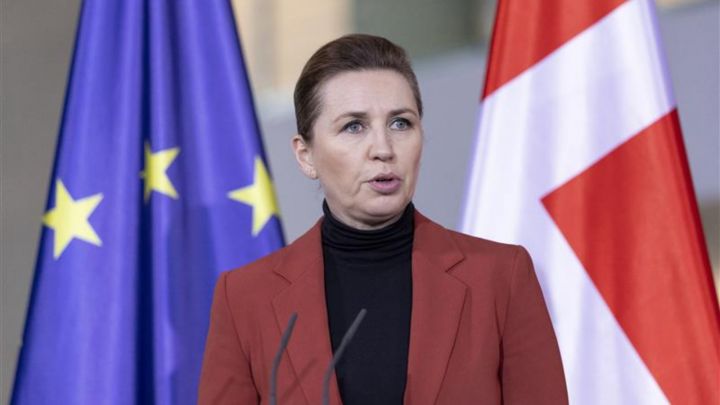
European Leaders Unite to Defend Greenland After US Threats
The renewed global focus on Greenland has revealed just how sensitive geopolitics can become when strategic interests, national sovereignty, and alliance politics intersect. In a development that quickly escalated from political commentary into a diplomatic flashpoint, European leaders have united to defend Greenland after statements from senior U.S. political figures suggested that the United States could one day take control of the Arctic territory. While no formal policy change has been announced, the remarks were enough to trigger strong reactions across Europe, where leaders saw the comments as a direct challenge to international norms and regional stability.
Greenland occupies a unique position in global affairs. Although it is an autonomous territory within the Kingdom of Denmark, it holds immense strategic importance far beyond its population size. The island sits at a critical crossroads between North America and Europe and lies at the heart of the rapidly changing Arctic region. As climate change accelerates ice melt, new shipping lanes are opening, untapped natural resources are becoming accessible, and military planners are reassessing the region’s strategic value. This has transformed Greenland from a distant, icy landmass into one of the most geopolitically significant territories of the 21st century.
The latest controversy resurfaced memories of earlier remarks made by former U.S. President Donald Trump, who openly expressed interest in purchasing Greenland during his previous term in office. At the time, the proposal was widely dismissed by Denmark and Greenlandic authorities as unrealistic and disrespectful. However, recent comments from individuals close to Trump, implying that the United States could assert dominance over Greenland without serious opposition, reignited fears that such ideas might not be entirely rhetorical. For European leaders, this was a moment that demanded a clear and united response.
In swift coordination, major European powers, including France, Germany, Italy, Spain, Poland, and the United Kingdom, reaffirmed their support for Denmark and Greenland. Their message was firm and unambiguous: Greenland’s sovereignty is non-negotiable, and its future can not be dictated by external powers. This collective stance highlighted Europe’s determination to defend territorial integrity, particularly when one of its own member states is involved. It also demonstrated a growing confidence among European nations to act together when core principles are perceived to be under threat.
At the core of Europe’s concern is the precedent such rhetoric could set. If powerful nations begin openly questioning the sovereignty of territories based on strategic convenience, it risks destabilizing the international order. European officials emphasized that borders and governance structures must be respected, regardless of a region’s economic or military value. Greenland, they argued, is not an asset to be acquired but a homeland whose people have the right to self-determination and political agency.
The Arctic dimension adds further complexity to the situation. Greenland is rich in rare earth minerals, which are essential for modern technologies such as electric vehicles, wind turbines, smartphones, and defence systems. As global demand for these materials grows, competition over access has intensified. Additionally, Greenland’s location makes it strategically vital for missile defence systems, satellite tracking, and early-warning capabilities. The United States already maintains a military presence on the island through long-standing agreements with Denmark, a fact European leaders point to as evidence that cooperation, rather than control, has been the foundation of Arctic security.

NATO unity has also emerged as a central issue in the debate. Denmark and the United States are both members of the alliance, which is built on mutual trust, collective defence, and respect for each member’s sovereignty. Any suggestion of unilateral action against an ally’s territory risks undermining the credibility of the alliance itself. European leaders were quick to stress that NATO’s strength lies not only in military power but in shared values and mutual respect. By defending Greenland, Europe is also defending the integrity of the transatlantic alliance.
Equally important are the voices of the Greenlandic people, which many argue have overlooked in global power discussions. Greenland’s leaders have consistently emphasized their desire for greater autonomy, sustainable economic development, and respect for indigenous rights. While they welcome international partnerships and investment, they strongly oppose being treated as a strategic bargaining chip between major powers. The renewed attention has reinforced calls for Greenland’s representatives to be fully included in any discussions about the island’s future.
This episode also reflects a broader shift in global politics. Around the world, major powers are becoming more assertive in securing strategic resources and geographic advantages. From Eastern Europe to the South China Sea and now the Arctic, competition is reshaping diplomatic relationships and testing international norms. Europe’s firm response to the Greenland issue suggests a recognition that hesitation or silence can be interpreted as weakness in an increasingly competitive global environment.
For the United States, the reaction from Europe serves as a reminder of the importance of alliance diplomacy. While Washington views Greenland as a key element of its Arctic strategy, European leaders argue that existing agreements already address security concerns without challenging sovereignty. The backlash highlights the limits of aggressive rhetoric and underscores the need for dialogue, cooperation, and respect within long-standing partnerships.
As the immediate tension begins to ease, the broader implications remain. Greenland has become a symbol of the new geopolitical era, where climate change, resource competition, military strategy, and national identity intersect. Europe’s United Stance sends a powerful message that sovereignty can not be overridden by strategic ambition, no matter how valuable a territory may be.
Ultimately, the Greenland situation serves as a reminder that global stability depends on adherence to international law and mutual respect among nations. As the Arctic continues to gain strategic importance, the choices made today will shape whether the region becomes a model of cooperation or a new arena of confrontation. InfoJet will continue to monitor this evolving story as Europe, the United States, and Greenland navigate one of the most consequential geopolitical debates of our time.
Reporter: Onyeka Evans
About the Author


