Global Inflation News Today as Central Banks Keep Interest Rates High
Why Global Inflation Remains Uneven Despite Tight Monetary Policies
Global inflation remains a major concern across the world as central banks continue to maintain tight monetary policies in an effort to control rising prices.
While some countries are beginning to see slight relief, others are still battling stubborn inflation driven by food prices, energy costs, housing pressures, and supply chain disruptions.
This uneven trend has left households, businesses, and investors uncertain about what lies ahead for the global economy.
Inflation refers to the steady rise in the prices of goods and services over time.
When inflation becomes too high, purchasing power weakens, making it harder for people to afford basic necessities.
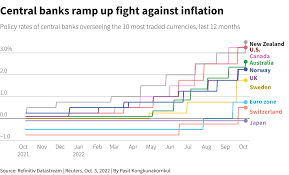
To combat this, central banks use interest rates as their primary tool. By raising interest rates, borrowing becomes more expensive, spending slows down, and price growth is expected to cool. However, recent developments show that this approach is producing mixed results across different regions.
In advanced economies such as the United States, the United Kingdom, and parts of Europe, inflation has slowed compared to previous peaks.
This improvement is largely due to aggressive interest rate hikes implemented over the past two years.
Higher rates have reduced consumer spending, slowed housing markets, and eased demand in several sectors.
Despite this progress, central banks remain cautious and unwilling to declare victory, fearing that inflation could resurface if policies are relaxed too early.
Emerging and developing economies are facing a tougher situation. Many countries in Africa, Asia, and Latin America are still experiencing high inflation due to weak currencies, rising import costs, and heavy reliance on food and fuel imports. For these nations, global interest rate hikes have also made it more expensive to service foreign debts, adding further strain to their economies.
As a result, inflation remains uneven globally, with recovery happening at different speeds.
Central banks across the world have chosen to maintain tight policies rather than rush into interest rate cuts.
Policymakers argue that sustained discipline is necessary to fully bring inflation under control. They are especially concerned about core inflation, which excludes volatile items such as food and energy and provides a clearer picture of underlying price pressures.

In many countries, core inflation remains elevated, signalling that price stability has not yet been fully restored.
Another major factor influencing inflation trends is energy prices. Global oil and gas markets have remained volatile due to geopolitical tensions and supply uncertainties. Any sudden increase in energy prices quickly translates into higher transportation and production costs, which then affect consumer prices. Central banks have little direct control over such external shocks, making inflation management even more challenging.
Food prices also continue to play a critical role, particularly in developing regions. Climate related disruptions, rising fertilizer costs, and logistical challenges have kept food inflation high in many countries. Since food makes up a large portion of household spending in poorer economies, even small price increases have a significant impact on living standards. This has fueled public concern and increased pressure on governments to provide relief measures.
Businesses are also adjusting to the current environment of high interest rates and uncertain inflation trends. Many companies have scaled back expansion plans, reduced hiring, or passed higher costs on to consumers. Small and medium-sized enterprises are among the most affected, as access to affordable credit has become increasingly limited. This has raised concerns about slower economic growth and potential job losses if tight conditions persist for too long.
Financial markets are closely watching central bank signals for clues about the future.
Investors are particularly focused on whether interest rate cuts could begin later in the year or be delayed further. Any indication of policy shifts often triggers sharp reactions in stock markets, bond yields, and currency values. So far, most central banks have emphasized caution, stressing that decisions will depend heavily on incoming economic data.
Looking ahead, economists expect global inflation to gradually ease, but risks remain. Persistent geopolitical tensions, climate related shocks, and supply chain disruptions could slow progress.
At the same time, prolonged tight monetary policies could dampen economic activity and increase the risk of recession in some regions. Striking the right balance between controlling inflation and supporting growth remains a difficult task for policymakers.
In conclusion, global inflation remains uneven as central banks maintain tight policies to safeguard price stability.
While progress has been made in some economies, others continue to struggle with rising costs and economic pressures.
For households and businesses, the path forward remains uncertain, with inflation and interest rate decisions likely to dominate economic discussions in the months ahead.
InfoJet will continue to monitor developments and provide timely updates on this critical global issue.
Reporter: Onyeka Evans
About the Author


