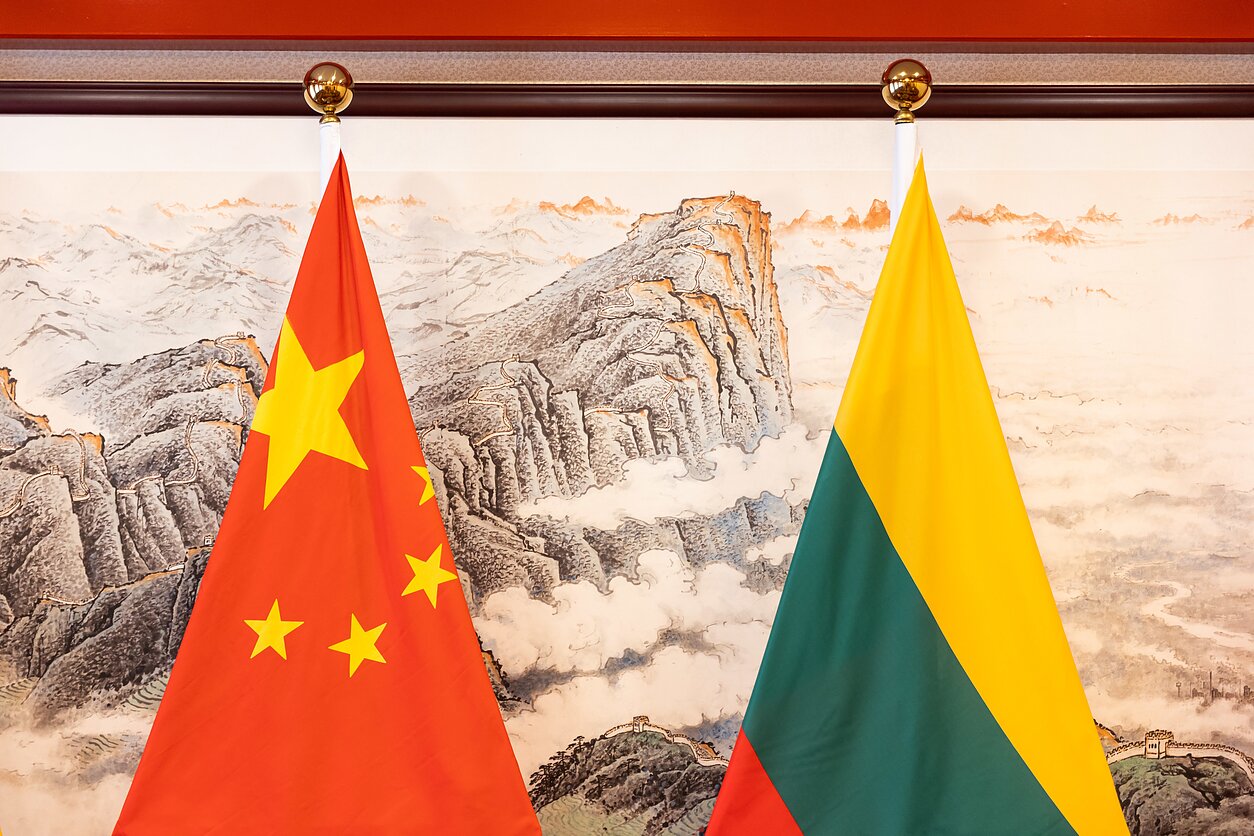
Why Lithuania Is Rebuilding Diplomatic Ties with China
By InfoJet Global Affairs Desk | February 2026
Lithuania’s decision to rebuild diplomatic ties with China marks one of the most closely watched geopolitical developments in Europe this year. After several years of strained relations, trade restrictions, and diplomatic downgrades, Vilnius is signalling a cautious but deliberate effort to stabilize its relationship with Beijing.
For observers across Europe, Asia, and the transatlantic alliance, Lithuania’s recalibration is more than a bilateral adjustment. It reflects the complex balancing act that small and medium-sized nations must perform in a global system increasingly shaped by rivalry between major powers.
This is the full picture behind Lithuania’s diplomatic reset — what caused the rupture, what has changed, and what it could mean for Europe and beyond.
How the Diplomatic Rift Began
The deterioration in relations between Lithuania and China began in 2021, when Lithuania allowed Taiwan to open a representative office in Vilnius under the name “Taiwanese Representative Office.” While many countries host Taiwanese trade offices, the use of the name “Taiwanese” rather than “Taipei” was viewed by Beijing as a challenge to the One China principle.
China responded swiftly.
Diplomatic relations were downgraded. Trade flows were disrupted. Lithuanian exports to China fell sharply. Multinational firms reported pressure within supply chains that included Lithuanian components. The dispute quickly escalated beyond symbolic diplomacy into tangible economic consequences.
The episode positioned Lithuania at the centre of global debate over Taiwan’s international status, European strategic autonomy, and China’s use of economic leverage in foreign policy disputes.
Economic Fallout and Trade Disruptions
While Lithuania is not one of China’s largest European trading partners, the impact of strained ties was nonetheless significant.
Key sectors such as manufacturing, food exports, and logistics felt immediate effects. Some Lithuanian companies struggled with customs delays and indirect restrictions affecting their ability to sell into Chinese markets.
Additionally, multinational corporations with operations spanning Europe and Asia faced supply chain complications. Some reported difficulties exporting products containing Lithuanian components into China.
The European Union later initiated discussions within the framework of trade defence mechanisms, reflecting broader concern over economic coercion.
For Lithuania, the experience served as a lesson in the vulnerabilities of small open economies operating within complex global trade systems.
Lithuania’s Strategic Position in Europe
Lithuania occupies a strategically sensitive location on NATO’s eastern flank, bordering Belarus and situated near Russia’s Kaliningrad exclave. Since Russia’s invasion of Ukraine, national security has become the dominant theme in Lithuanian foreign policy.
Vilnius has been among the strongest supporters of Ukraine and one of the most vocal advocates for stronger NATO deterrence in Eastern Europe.
At the same time, Lithuania remains deeply integrated within the European Union and works closely with the NATO alliance structure.
This security orientation shapes Lithuania’s global diplomacy. While national defence priorities remain paramount, policymakers must also ensure economic stability and sustainable trade relationships.
Europe’s Broader China Debate
Lithuania’s recalibration does not occur in isolation. Across Europe, governments are reassessing how to manage relations with China.
The European Commission has emphasized a strategy of “de-risking” rather than full decoupling. This approach seeks to reduce strategic dependencies in critical sectors while maintaining trade where possible.
Major European economies such as Germany and France continue to engage economically with China, even as they adopt more cautious policies in sensitive industries.
For Lithuania, aligning its approach with broader EU strategy offers both economic and diplomatic advantages. Acting within a European framework reduces isolation and strengthens negotiating leverage.
The Economic Case for Re-engagement
Rebuilding ties with China is not necessarily an endorsement of Beijing’s policies. Rather, it reflects economic pragmatism.
China remains the world’s second-largest economy and a central player in global supply chains. For export-driven economies, access to large markets is essential for growth.
Lithuanian business groups have increasingly advocated for restoring dialogue to reduce uncertainty. Even limited normalization can provide predictability for investors and exporters.
Moreover, with global growth slowing in 2025 and early 2026, maintaining diversified trade channels has become more urgent. Smaller economies can not afford prolonged disruptions in external markets.
Taiwan Policy: Continuity With Adjustment
Lithuania has not reversed its engagement with Taiwan. However, officials appear to be recalibrating how that relationship is managed diplomatically.
The challenge for Vilnius lies in maintaining its commitment to democratic partnerships while avoiding extended economic retaliation.
Lithuania’s strategy appears to be shifting from symbolic confrontation toward structured diplomacy preserving principles while reopening communication channels with Beijing.
This delicate balance will define the credibility of Lithuania’s broader foreign policy posture.
China’s Motivations for Engagement
Beijing also has reasons to stabilize relations.
China’s ties with the European Union have faced multiple strains in recent years, including trade disputes, investment screening measures, and geopolitical disagreements.
Restoring stable relations with Lithuania could signal China’s willingness to normalize tensions within the EU framework. It also reduces the risk of Lithuania becoming a persistent symbol of European resistance.
For China, improving relations with smaller EU states may help prevent the consolidation of unified European opposition on sensitive issues.
Domestic Political Considerations
Foreign policy recalibration often reflects internal political debate.
In Lithuania, policymakers must balance national security priorities, economic interests, and public opinion. While some political voices support firm positions rooted in values-based diplomacy, others emphasize the economic cost of prolonged disputes.
Public sentiment toward China has been shaped by global events, but economic pressures can not be ignored.
Rebuilding diplomatic ties does not imply abandoning strategic caution. Instead, it signals recognition that sustained economic friction carries domestic consequences.
Implications for EU-China Relations
Lithuania’s move could influence the broader trajectory of EU-China relations.
If normalization progresses smoothly, it may reinforce the European Union’s strategy of engagement combined with strategic safeguards.
If tensions resurface, it may highlight the limits of diplomatic compromise in an increasingly polarized global environment.
Lithuania’s experience has already informed EU discussions about economic resilience and trade defence tools.
Security Remains the Priority
Despite diplomatic outreach, Lithuania’s core security alignment remains unchanged.
The country continues to strengthen defence cooperation within NATO and deepen transatlantic ties. Relations with the United States remain central to Lithuania’s strategic framework.
Economic normalization with China does not replace or dilute Lithuania’s security commitments. Instead, it reflects a compartmentalization of economic diplomacy and security policy.
Risks and Uncertainties
Rebuilding trust after years of tension is not simple.
Risks include:
Slow progress in restoring trade volumes
Continued political sensitivity surrounding Taiwan
Broader geopolitical developments affecting EU-China ties
Domestic political shifts in either country
Both sides are likely to proceed cautiously, prioritizing incremental improvements rather than sweeping announcements.
Diplomatic resets often require patience and sustained engagement.
A Broader Lesson for Small States
Lithuania’s experience underscores a broader lesson for smaller nations navigating great power competition.
Economic globalization creates both opportunity and vulnerability. Strategic decisions can carry commercial consequences. Balancing values, security, and economic interests requires careful calibration.
In a world shaped by U.S.-China rivalry, European states increasingly seek strategic autonomy while preserving alliances.
Lithuania’s recalibration may serve as a model for how smaller states adapt without fully reversing courses.
Looking Ahead
As 2026 progresses, several indicators will determine the success of Lithuania’s diplomatic effort:
Restoration of full ambassador-level relations
Gradual normalization of trade flows
Increased diplomatic dialogue
Reduction in trade friction
Observers will also monitor how Lithuania’s approach aligns with evolving EU-China policy frameworks.
The ultimate outcome will depend not only on bilateral discussions but also on broader geopolitical dynamics.
Conclusion
Lithuania’s decision to rebuild diplomatic ties with China represents a calculated reset rather than a dramatic policy reversal.
After years of strained relations triggered by disputes over Taiwan representation, economic pressures and strategic considerations have prompted Vilnius to reopen channels of dialogue with Beijing.
The move reflects a broader European trend toward pragmatic engagement while maintaining security commitments and strategic caution.
In an era defined by geopolitical competition and economic interdependence, Lithuania’s diplomatic recalibration illustrates the complexity of navigating global power dynamics.
For Europe and beyond, the outcome of this reset will offer insight into how smaller nations balance principle, pragmatism, and national interest in a rapidly evolving international order.
About the Author


