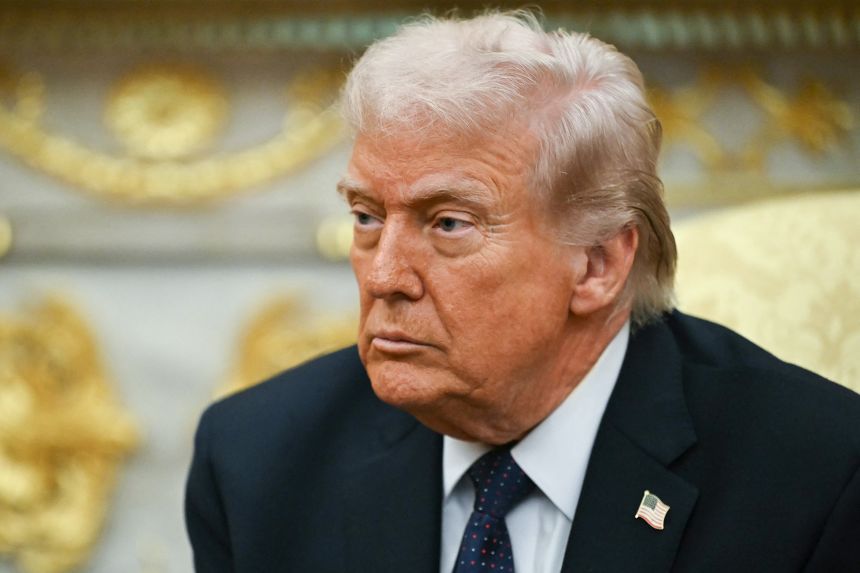
Trump Blasts NATO as “Cowards” as Iran Conflict Escalates
Trump Blasts NATO as “Cowards” as Iran Conflict Escalates: A Deepening Global Crisis
A Crisis Reaches Boiling Point**
The geopolitical landscape has entered one of its most volatile phases in recent memory. As the conflict between the United States, Israel, and Iran intensifies, former U.S. President Donald Trump has ignited a new wave of controversy by publicly attacking NATO allies. His accusation that NATO members are “cowards” for refusing to join the U.S.–Israel military campaign has triggered diplomatic shockwaves across Europe and beyond.
The remarks come at a moment when the Middle East is already on edge. The Strait of Hormuz remains effectively closed, global energy markets are rattled, and military tensions are spreading across multiple fronts. Trump’s comments have added a new layer of political friction to an already combustible situation.
This article explores the full context of Trump’s statements, the reactions from NATO capitals, the evolving military situation, and the broader economic and political implications of a conflict that shows no signs of slowing down.
Trump’s Accusation: “NATO Is a Paper Tiger”
In a strongly worded message posted on his social media platform, Trump criticized NATO members for what he described as a “shameful lack of courage.” He argued that while European nations complain about rising oil prices and the economic fallout of the conflict, they have refused to contribute militarily to the U.S.–Israel campaign against Iran.
Trump wrote that “without the U.S.A., NATO is a paper tiger,” suggesting that the alliance lacks the resolve to confront major threats without American leadership. He accused member states of hiding behind diplomatic language while expecting the United States to shoulder the burden of global security.
His comments were not entirely unexpected. Throughout his political career, Trump has repeatedly criticized NATO for what he sees as unequal burden‑sharing. However, the timing and tone of his latest remarks have amplified tensions at a moment when unity among Western allies is already strained.
NATO’s Response: Calls for Restraint and Consultation
European officials responded cautiously but firmly. Several NATO governments emphasized that they were not consulted before the United States and Israel launched their initial strikes on Iran in late February. They argued that joining the conflict now would risk a broader regional war that could engulf the entire Middle East.
Diplomats from Germany, France, Italy, and the Netherlands stressed that NATO’s mandate does not automatically extend to military operations outside the Euro‑Atlantic region unless all members agree. They also noted that the alliance’s priority is preventing escalation, not expanding the conflict.
Privately, some European officials expressed frustration with Trump’s rhetoric, saying it undermines diplomatic efforts to stabilize the situation. Publicly, however, most governments avoided direct confrontation, choosing instead to reiterate their commitment to dialogue and de‑escalation.
The Military Situation: A Region on the Brink
The conflict has expanded rapidly since the first wave of strikes. Iran has responded with a series of retaliatory attacks targeting U.S. and Israeli assets, as well as infrastructure linked to the South Pars gas field. The United States has deployed thousands of additional Marines and repositioned naval assets throughout the Gulf.
Israel continues to conduct airstrikes on Iranian military facilities, arguing that it is acting in self‑defense. Iranian‑aligned militias in Iraq, Syria, and Lebanon have also intensified their operations, raising fears of a multi‑front confrontation.
The closure of the Strait of Hormuz has become one of the most significant flashpoints. As one of the world’s most critical maritime chokepoints, its disruption has immediate and far‑reaching consequences for global energy supplies.
The Strait of Hormuz: A Global Pressure Point
Nearly one‑fifth of the world’s oil supply passes through the Strait of Hormuz. With Iran effectively blocking the route, shipping companies have rerouted vessels, insurance premiums have skyrocketed, and energy markets have entered a state of heightened volatility.
Oil prices have surged to levels not seen in years. Analysts warn that if the blockade continues, the world could face a severe energy shock. Several European and Asian nations have begun emergency consultations on energy reserves, while the United States has tapped into strategic petroleum reserves to stabilize domestic markets.
The economic ripple effects are already visible. Stock markets have experienced sharp fluctuations, and industries dependent on oil and gas are bracing for supply disruptions. The longer the crisis persists, the more severe the global economic consequences are likely to become.
Diplomatic Fallout: A Fractured Western Alliance
Trump’s comments have exposed deep divisions within the Western alliance. While the United States and Israel maintain that strong military action is necessary to deter Iran, many European governments believe that diplomacy remains the only viable path to long‑term stability.
The disagreement reflects broader strategic differences. The United States views Iran primarily through the lens of security threats and regional influence. Europe, however, is more concerned about the humanitarian consequences of a prolonged conflict and the potential for mass displacement.
These differing priorities have created a diplomatic rift that could reshape transatlantic relations for years to come. Trump’s remarks have only widened that gap, raising questions about the future cohesion of NATO.
Domestic Politics: Trump’s Strategic Positioning
Trump’s attack on NATO also carries domestic political implications. As he positions himself as the strongest voice on national security, his criticism of the alliance resonates with supporters who believe the United States has carried an unfair share of global defense responsibilities.
His comments may also be aimed at reinforcing his long‑standing narrative that American allies take advantage of U.S. military power without contributing proportionally. Whether this strategy will strengthen his political standing remains to be seen, but it has undeniably intensified the debate over America’s role in global security.
Iran’s Perspective: Resistance and Retaliation
From Tehran’s point of view, the conflict is framed as a defensive struggle against foreign aggression. Iranian leaders have vowed to continue resisting what they describe as “unprovoked attacks” by the United States and Israel. State media has portrayed the closure of the Strait of Hormuz as a legitimate response to Western military pressure.
Iran has also sought to rally support from regional allies and sympathetic governments, arguing that Western intervention threatens the sovereignty and stability of the entire Middle East. Whether this narrative gains traction internationally remains uncertain, but it has strengthened domestic support for the government’s stance.
Regional Reactions: Anxiety and Strategic Calculations
Countries across the Middle East are watching the conflict with growing concern. Gulf states are particularly vulnerable due to their proximity to Iran and their reliance on maritime trade routes. While some governments quietly support U.S. efforts to contain Iran, they are also wary of being drawn into a wider war.
Turkey, Qatar, and Iraq have called for immediate de‑escalation and renewed diplomatic engagement. Saudi Arabia and the UAE have increased security measures around key infrastructure but have avoided direct involvement in the conflict.
The region’s complex web of alliances and rivalries makes the situation even more unpredictable. A single miscalculation could trigger a chain reaction with devastating consequences.
Economic Implications: A World on Edge
The economic impact of the conflict extends far beyond the Middle East. Rising energy prices have already affected transportation, manufacturing, and consumer goods. Inflationary pressures are mounting, and central banks are preparing for potential market instability.
Financial analysts warn that if the crisis continues, global growth could slow significantly. Developing countries that rely heavily on imported energy may face severe economic strain. Even major economies like China, India, and Japan are bracing for disruptions.
The uncertainty has also affected investor confidence. Markets have become increasingly volatile, and businesses are reassessing supply chains and risk exposure.
The Path Forward: Diplomacy or Escalation
As the conflict enters its third week, the international community faces a stark choice. Continued military escalation risks plunging the region into a full‑scale war with global repercussions. Diplomacy, while challenging, remains the only path capable of preventing further destabilization.
Several countries have called for an emergency session of the United Nations Security Council. However, deep divisions among major powers make consensus difficult. The United States insists that Iran must halt its attacks before negotiations can begin, while Iran demands an end to U.S. and Israeli military operations.
The coming weeks will be critical. The decisions made now will shape the geopolitical landscape for years to come.
Conclusion: A World at a Crossroads
Trump’s accusation that NATO is acting like “cowards” has added a new layer of tension to an already explosive situation. The conflict between the United States, Israel, and Iran has disrupted global energy markets, strained diplomatic alliances, and raised the specter of a broader regional war.
As military operations continue and political rhetoric intensifies, the world finds itself at a crossroads. The choices made by global leaders in the days ahead will determine whether the crisis escalates into a catastrophic conflict or moves toward a fragile but necessary peace.
About the Author


