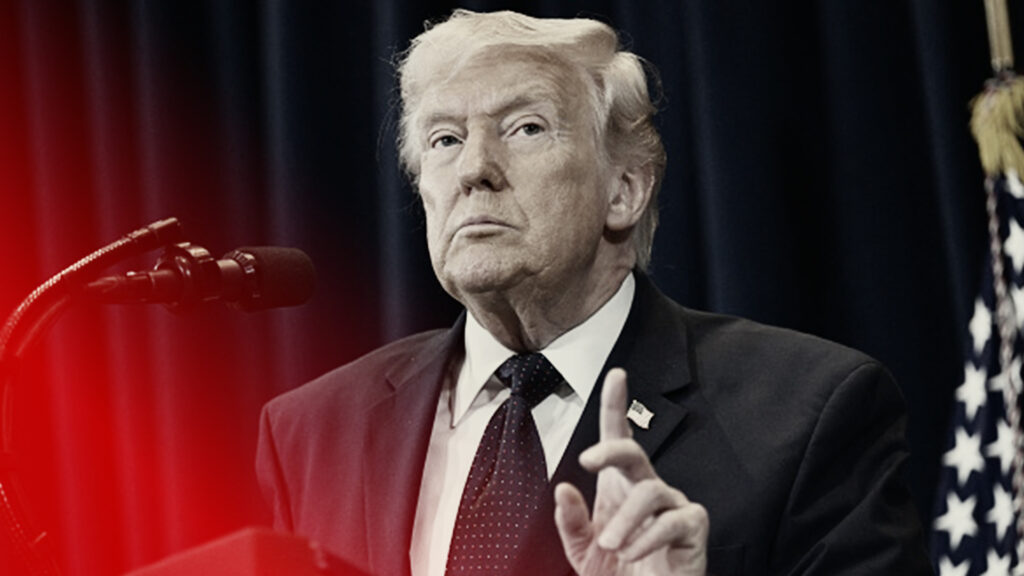
Trump Threatens Iran with Power Plant Strikes Over Hormuz Oil Blockade
By InfoJet Newsroom
Published by Mr. Peter Asika
Middle East Crisis Deepens as U.S. Issues Stark Warning
Tensions in the Middle East have reached a critical level following a strong warning from Donald Trump to the Iranian government. The United States has threatened to carry out direct military strikes on Iran’s power infrastructure if the country does not reopen the vital Strait of Hormuz.
The warning comes amid growing concerns over global oil supply disruptions and rising geopolitical instability. The situation is developing rapidly, with world leaders closely monitoring the next move from Tehran.
Ultimatum Raises Global Alarm
According to emerging details, the U.S. leadership has issued a strict deadline for Iran to restore free movement of oil tankers through the Strait of Hormuz. The waterway is one of the most important global trade routes, carrying a significant portion of the world’s crude oil exports.
Failure to comply, the U.S. has warned, could result in targeted strikes on Iran’s power plants. Such a move would mark a serious escalation, shifting the conflict from indirect confrontation to direct attacks on critical national infrastructure.
The message from Washington signals that the situation is no longer being treated as a regional dispute but as a threat to global economic stability.
Why the Strait of Hormuz Matters
The Strait of Hormuz plays a central role in global energy supply. Any disruption in this narrow passage can trigger immediate consequences worldwide.
Key impacts already being observed include rising oil prices, increased shipping risks, and growing uncertainty in international markets. Countries that rely heavily on imported fuel are beginning to feel the pressure as costs continue to climb.
Energy analysts warn that prolonged restrictions could lead to shortages and inflation across multiple economies.
Iran Responds with Strong Warnings
Iranian officials have reacted firmly to the U.S. threat, stating that any attack on their infrastructure will be met with a powerful response. The country has made it clear that it will not hesitate to target U.S. interests and allied assets across the region if provoked.
This response highlights the fragile balance in the Middle East, where a single military action could quickly expand into a wider conflict involving several nations.
The growing exchange of threats has increased fears that diplomatic solutions may be slipping out of reach.
Military Tensions Continue to Rise
The current crisis is unfolding against the backdrop of ongoing military exchanges in the region. Recent confrontations have already intensified hostilities, with both sides demonstrating their capabilities through strikes and counter-strikes.
The possibility of attacks on power plants introduces a new level of risk, as such infrastructure is essential not only for military operations but also for civilian life.
Experts warn that targeting energy facilities could lead to widespread blackouts, economic disruption, and humanitarian challenges within Iran.
Global Economic Shockwaves
Beyond the battlefield, the economic impact of the crisis is becoming increasingly visible. Oil markets have reacted sharply, with prices climbing as uncertainty grows.
Industries dependent on stable fuel supply are beginning to face rising operational costs, while governments are preparing for potential long-term disruptions.
Financial markets are also showing signs of volatility, reflecting investor concerns about the possibility of a broader conflict.
International Community Calls for Calm
World leaders and international organizations are urging both sides to avoid further escalation. Diplomatic efforts are ongoing, with calls for dialogue and restraint growing louder.
However, the sharp tone of recent statements suggests that tensions remain high, and the window for peaceful resolution may be narrowing.
The involvement of multiple global powers adds another layer of complexity to an already volatile situation.
What Comes Next
The coming hours are expected to be decisive. Iran faces a difficult choice between easing tensions by reopening the Strait or standing firm in defiance of U.S. pressure.
At the same time, the United States must weigh the risks of military action against the potential consequences of a wider regional conflict.
Observers warn that any miscalculation at this stage could have far-reaching effects, not only for the Middle East but for the global economy as a whole.

Strategic Calculations Behind the U.S. Threat
The warning issued by Donald Trump is not only a military signal but also a strategic move designed to pressure Iran into compliance without immediate confrontation. By targeting power infrastructure, the United States is signaling its ability to disrupt Iran’s internal stability without launching a full-scale invasion.
Military analysts suggest that such threats are intended to force quick decisions. Power plants are critical to daily life, supporting hospitals, industries, communication systems, and national defense. Disabling them could create widespread internal pressure on Iranian leadership.
However, this approach carries significant risks. Any strike on civilian infrastructure could trigger international backlash and potentially violate established norms of conflict.
Iran’s Strategic Position and Leverage
Iran’s control over the Strait of Hormuz gives it a powerful bargaining tool. The country has long used its geographic advantage to influence global oil markets and assert its role in regional politics.
By restricting access to the strait, Iran is demonstrating that it can impact not just its immediate rivals but the global economy as a whole. This leverage is central to its current stance.
At the same time, Iran must carefully balance its actions. Prolonged disruption could unite global powers against it, leading to stronger military and economic responses.
Risk of a Broader Regional War
One of the most pressing concerns is the possibility that the crisis could expand beyond a bilateral conflict. The Middle East is home to multiple alliances, rivalries, and ongoing tensions that could be triggered by a single major event.
If the United States follows through on its threat, retaliation from Iran could extend to neighboring countries, especially those hosting U.S. military bases or supporting American operations.
Such a scenario could involve multiple nations and transform the situation into a wider regional war, affecting key areas across the Gulf and beyond.
Impact on Global Trade and Shipping
The disruption of the Strait of Hormuz is already affecting global shipping routes. Tankers and cargo vessels are facing increased risks, leading to higher insurance costs and delays.
Shipping companies are beginning to reconsider routes, while some have reduced operations in the region altogether. This could lead to a slowdown in global trade, particularly for energy supplies.
The longer the situation continues, the more severe the economic consequences are likely to become.
Energy Markets Under Pressure
Global energy markets remain highly sensitive to developments in the Gulf. Even the threat of disruption has pushed oil prices upward, reflecting fears of reduced supply.
Countries that depend heavily on imported oil are especially vulnerable. Governments may be forced to tap into strategic reserves or seek alternative suppliers to stabilize their economies.
Energy experts warn that if the crisis escalates further, the world could face a prolonged period of high fuel costs and economic strain.
Diplomatic Channels Still Open
Despite the rising tension, diplomatic efforts have not completely stopped. Backchannel negotiations and international mediation attempts are reportedly ongoing, with several countries trying to de-escalate the situation.
These efforts focus on reopening the Strait of Hormuz while addressing broader security concerns in the region.
However, the success of diplomacy will depend on both sides showing willingness to compromise, which remains uncertain given the current tone of exchanges.
Civilian Impact and Humanitarian Concerns
Beyond politics and military strategy, the potential human cost of escalation is a growing concern. Any attack on power infrastructure could directly affect millions of civilians.
Electricity shortages could disrupt essential services such as healthcare, water supply, and communication systems. This raises the risk of a humanitarian crisis, particularly in densely populated areas.
International organizations are likely to increase monitoring of the situation as fears grow over the possible impact on civilian populations.
Global Powers Watching Closely
Major global players, including European and Asian economies, are closely observing the developments. Many of these nations rely heavily on stable energy supplies from the Gulf region.
Their responses could shape the next phase of the crisis, whether through diplomatic pressure, economic measures, or strategic alliances.
The involvement of multiple global stakeholders makes the situation more complex and increases the stakes for all parties involved.
Final Outlook
The confrontation between the United States and Iran is entering a decisive phase. With both sides maintaining strong positions, the risk of escalation remains high.
The coming days will determine whether the crisis moves toward resolution or intensifies into a broader conflict. For now, uncertainty dominates, and the world remains on edge as events continue to unfold.
Conclusion
The standoff between the United States and Iran marks a significant moment in global geopolitics. With energy security, regional stability, and international relations all at stake, the situation remains highly unpredictable.
As the world watches closely, the decisions made in the coming days could shape the course of events for months or even years to come.
About the Author


