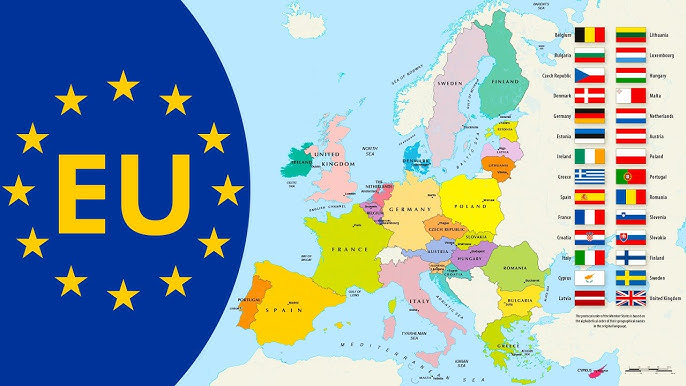
EU Weighs Stronger Defence Strategy as Global Geopolitical Tensions Intensify
EU Weighs Stronger Defence Strategy as Global Geopolitical Tensions Intensify
The European Union is holding renewed and intensive discussions on the future of its defence and security strategy as geopolitical tensions continue to rise across the world. From prolonged wars to growing regional instability, global developments are forcing European leaders to reassess how prepared the bloc is to face both current and future security threats.
In recent years, Europe’s security environment has changed dramatically. Threats are no longer limited to traditional military confrontation between states. Cyber attacks, economic pressure, misinformation campaigns, terrorism, and energy supply disruptions are now part of the broader security landscape confronting EU member states.
EU officials believe that these challenges can no longer be handled effectively by individual countries acting alone. Instead, they argue that closer coordination and deeper cooperation among member states are necessary to protect the union as a whole and to maintain long-term stability.
One of the strongest influences on the current debate is the ongoing conflict in Eastern Europe. The war has not only brought military violence closer to EU borders but has also exposed serious gaps in defence readiness across the continent. Issues such as limited ammunition reserves, slow equipment replacement, and uneven military capabilities have become increasingly visible.
While the European Union has mobilized significant support for Ukraine, the conflict has also raised uncomfortable questions about Europe’s ability to defend itself in a prolonged crisis. Many policymakers now believe that relying heavily on external allies may no longer be a sustainable long-term strategy.
As a result, discussions are increasingly focused on strengthening collective military capacity. This includes improving joint planning, increasing shared training exercises, and enhancing interoperability between national armed forces. EU leaders believe that a more unified approach would allow Europe to respond faster and more effectively in times of crisis.
Defence spending remains a sensitive but unavoidable topic. Some member states have already increased military budgets in response to rising threats, while others face economic constraints that limit their ability to spend more. EU officials are encouraging balanced investment that prioritizes modernization, efficiency, and strategic value.
Beyond traditional military spending, attention is also being directed toward emerging technologies. Advanced surveillance systems, artificial intelligence, space based assets, and unmanned platforms are becoming central to modern defence strategies. European leaders are exploring how joint investment in these areas could give the bloc a technological edge.
Cybersecurity is another area of growing concern. Digital infrastructure now underpins everything from energy supply and banking systems to public services and elections. EU institutions warn that hostile cyber activity is increasing in scale and sophistication, posing serious risks to national and economic security.
To address this, policymakers are discussing stronger cyber defence cooperation, including shared intelligence, coordinated response mechanisms, and joint cyber training programs. Protecting digital resilience is now seen as equally important as maintaining physical military strength.
The European defence industry is also playing a central role in the conversation. Recent global disruptions have highlighted Europe’s dependence on external suppliers for critical defence equipment. EU leaders are examining ways to strengthen domestic production and improve cross-border industrial cooperation.
Supporting European manufacturers is viewed not only as a security necessity but also as an economic opportunity. A stronger defence industrial base could create jobs, drive innovation, and reduce supply chain vulnerabilities during periods of global instability.
However, efforts to deepen defence cooperation face political and structural challenges. Member states have different historical experiences, strategic cultures, and levels of military engagement. Some countries remain cautious about initiatives that could limit national sovereignty over defence decisions.
There are also ongoing discussions about how EU defence efforts should relate to existing security alliances. Leaders continue to emphasize that strengthening European defence is meant to complement, not replace, current partnerships and collective security arrangements.
Public opinion remains a critical factor in shaping policy decisions. While awareness of security risks has increased among European citizens, there is also concern about the social and economic impact of higher defence spending. EU leaders must balance security priorities with public expectations for economic stability and social welfare.
Clear communication is therefore essential. Officials stress the importance of explaining why defence investments are necessary and how they contribute to long-term peace rather than conflict. Maintaining public trust will be key to sustaining political support for deeper cooperation.
Looking ahead, EU officials expect that current discussions will lead to more concrete policy actions. These may include expanded funding mechanisms, clearer strategic guidelines, and stronger coordination during emergencies. While progress may be gradual, the overall direction points toward deeper integration.
For the European Union, strengthening defence is increasingly viewed as a shared responsibility in a world marked by uncertainty and rapid change. Leaders believe that collective action today will help safeguard the bloc’s security and stability in the years to come.
As global geopolitical tensions continue to intensify, the choices made by EU policymakers will have far-reaching consequences not only for Europe but for international security as a whole. The evolving defence strategy reflects a broader effort to adapt to a changing world order.
InfoJet will continue to follow these developments closely, providing readers with timely analysis and reliable insight into how Europe’s defence decisions are shaping the global security landscape.
Reporter: Dr Peter Asika
About the Author


