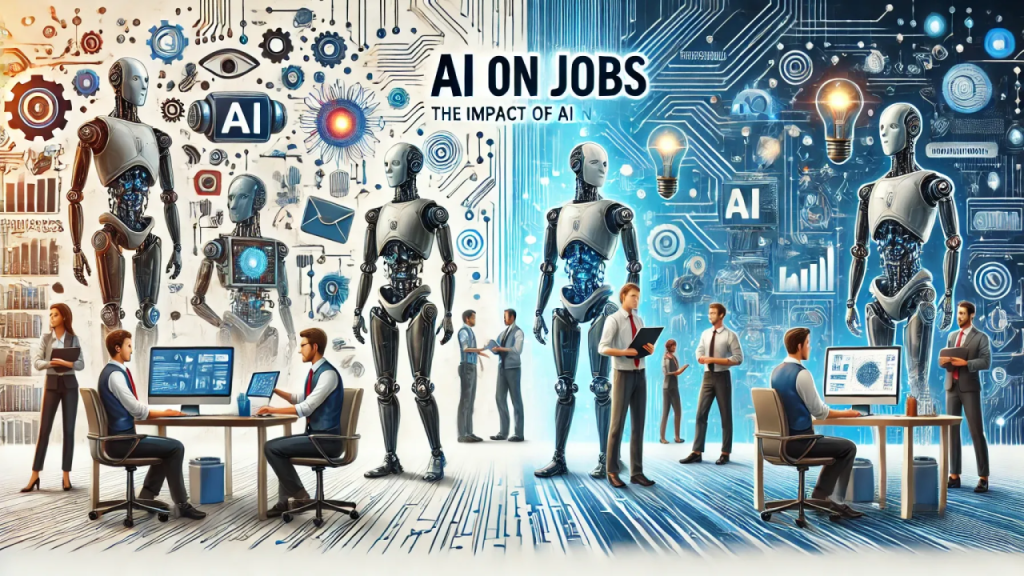
How AI Is Reshaping Global Jobs in 2026
By InfoJet Technology and Economy Desk | February 2026
Artificial Intelligence is no longer a future concept. In 2026, it is a defining force in the global labor market.
From automated customer service systems to advanced data analytics and creative content generation, AI is transforming how businesses operate and how workers perform their roles. While earlier waves of automation primarily affected manufacturing, today’s AI revolution is reaching white collar professions, creative industries, logistics, healthcare, education, and finance.
The transformation is not simply about machines replacing people. It is about restructuring the nature of work itself.
This is how AI is reshaping global jobs in 2026.
From Automation to Augmentation
The early narrative around AI focused heavily on job displacement. However, the current phase is more complex.
Organizations are increasingly using AI to augment human capability rather than eliminate it. Tools developed by companies such as OpenAI, Microsoft, and Google are embedded into workplace software systems, assisting with writing, coding, research, and data analysis.
Instead of replacing professionals outright, AI systems now handle repetitive tasks, generate first drafts, analyze patterns, and provide recommendations. Human workers remain responsible for oversight, strategy, creativity, and ethical judgment.
This shift has increased productivity in sectors that rely heavily on information processing.
Sectors Experiencing Rapid Transformation
Technology and Software Development
AI powered coding assistants are now widely adopted in development teams. Engineers use them to generate code snippets, debug errors, and accelerate product deployment cycles.
This has reduced the time required to launch software products and has changed the skill requirements for entry level developers. Employers now prioritize problem solving and system design over routine coding.
Finance and Banking
Financial institutions use AI for fraud detection, risk assessment, algorithmic trading, and customer service automation.
Banks deploy predictive analytics models to evaluate credit risk in real time. Investment firms rely on AI to analyze large datasets across global markets.
While traditional roles such as back office processing have declined, demand has grown for data scientists, compliance specialists, and AI governance professionals.
Healthcare
In healthcare, AI assists in medical imaging analysis, early disease detection, and patient data management.
Doctors increasingly use AI tools to review scans, detect anomalies, and improve diagnostic accuracy. Rather than replacing physicians, these systems enhance clinical decision making.
The healthcare workforce is evolving toward a hybrid model where digital literacy is as important as medical training.
Manufacturing and Logistics
Advanced robotics powered by AI have improved precision and efficiency in factories and warehouses.
Companies such as Amazon use AI driven logistics systems to optimize inventory and delivery routes.
Although some manual roles have declined, new positions in robotics maintenance, automation supervision, and AI system integration have emerged.
The Rise of New Job Categories
While AI automates certain functions, it also creates entirely new career paths.
In 2026, emerging roles include:
AI ethics officers
Prompt engineers
Machine learning auditors
Data governance specialists
Automation strategy consultants
Organizations recognize that deploying AI responsibly requires oversight. Concerns around bias, privacy, and accountability have made governance roles essential.
This shift illustrates a broader trend. Technological revolutions tend to create new categories of employment even as they disrupt existing ones.
The Skills Gap Challenge
One of the most pressing issues in 2026 is the widening skills gap.
Workers whose roles are heavily task based face higher risk of displacement. At the same time, employers report shortages in advanced technical skills.
Governments and educational institutions are responding by expanding digital training programs. Coding boot camps, AI literacy courses, and vocational retraining initiatives are becoming common across Europe, Asia, and North America.
Lifelong learning is no longer optional. It has become a core requirement for workforce resilience.
Impact on Emerging Markets
Emerging economies face both opportunity and risk in the AI era.
On one hand, AI tools lower barriers to entry for digital entrepreneurship. Small businesses can access advanced analytics, automated marketing systems, and AI powered design tools without large capital investment.
On the other hand, economies that rely heavily on outsourcing and repetitive service roles may face pressure as automation becomes more efficient.
The challenge for policymakers in developing nations is to invest in digital infrastructure and education quickly enough to remain competitive.
Remote Work and Digital Collaboration
AI has further accelerated the normalization of remote work.
Automated scheduling systems, virtual assistants, and intelligent collaboration platforms have made cross border teamwork more efficient.
Companies are increasingly building global teams without geographic limitations. This has intensified global talent competition while expanding opportunities for skilled professionals in emerging markets.
However, it has also increased performance monitoring through AI analytics tools, raising questions about privacy and workplace surveillance.
Wage Polarization and Inequality
AI adoption has amplified discussions about wage inequality.
Highly skilled professionals who can design, manage, and deploy AI systems often command higher salaries. Meanwhile, workers in routine roles face wage stagnation or displacement.
Some economists argue that AI could increase productivity enough to raise overall economic output. Others warn that without strong policy frameworks, the benefits may concentrate among a small segment of the population.
Governments are exploring measures such as reskilling subsidies, digital taxes, and social safety net expansion to address inequality risks.
Corporate Strategy and Workforce Planning
In 2026, AI integration is no longer optional for large corporations. It is central to competitive strategy.
Executives are restructuring departments around automation capabilities. Workforce planning increasingly includes hybrid teams composed of human employees and AI systems.
Human resource departments now evaluate candidates based on adaptability, digital fluency, and problem solving ability rather than solely technical expertise.
The corporate world is shifting from a model of static job descriptions to dynamic role definitions that evolve alongside technology.
Ethical and Regulatory Considerations
The rapid deployment of AI in workplaces has raised ethical and regulatory concerns.
The European Union has advanced comprehensive AI regulatory frameworks aimed at ensuring transparency and accountability.
Policymakers worldwide are debating standards for data protection, algorithmic fairness, and automated decision making.
Companies that fail to implement responsible AI practices risk legal and reputational consequences.
Regulation in 2026 is increasingly focused not on stopping innovation but on guiding its responsible use.
The Human Element Remains Central
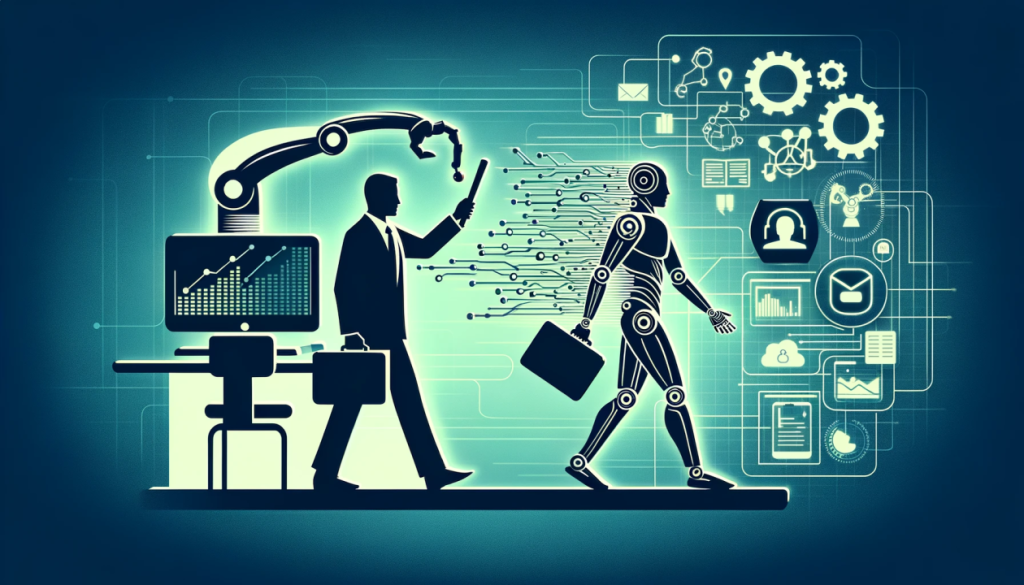
Despite rapid technological progress, one theme remains consistent. AI cannot fully replicate human creativity, empathy, ethical reasoning, and strategic thinking.
Roles that require complex negotiation, emotional intelligence, and cultural understanding remain deeply human.
Rather than eliminating the workforce, AI is pushing it toward higher value tasks.
Workers who adapt, upskill, and integrate AI into their workflows are more likely to thrive.
Looking ahead, AI adoption is expected to accelerate rather than slow.
The conversation is shifting from whether AI will change jobs to how quickly workers and institutions can adapt.
Global job markets in 2026 are characterized by transformation, not collapse. Some roles are disappearing, many are evolving, and new categories are emerging.
The pace of change demands proactive policymaking, corporate responsibility, and individual resilience.
Conclusion
Artificial Intelligence in 2026 is reshaping global employment patterns across nearly every industry.
While automation is replacing certain repetitive tasks, AI is simultaneously creating new professional opportunities, redefining skill requirements, and increasing productivity.
The transition is complex and uneven. It presents risks of inequality and displacement, but also opportunities for innovation and growth.
For businesses, governments, and workers alike, the central challenge is adaptation. In a rapidly evolving digital economy, those who learn to work alongside AI rather than compete against it will define the next phase of global labor markets.
As 2026 unfolds, one reality is clear. AI is not just changing jobs. It is redefining the structure of work itself.
About the Author


