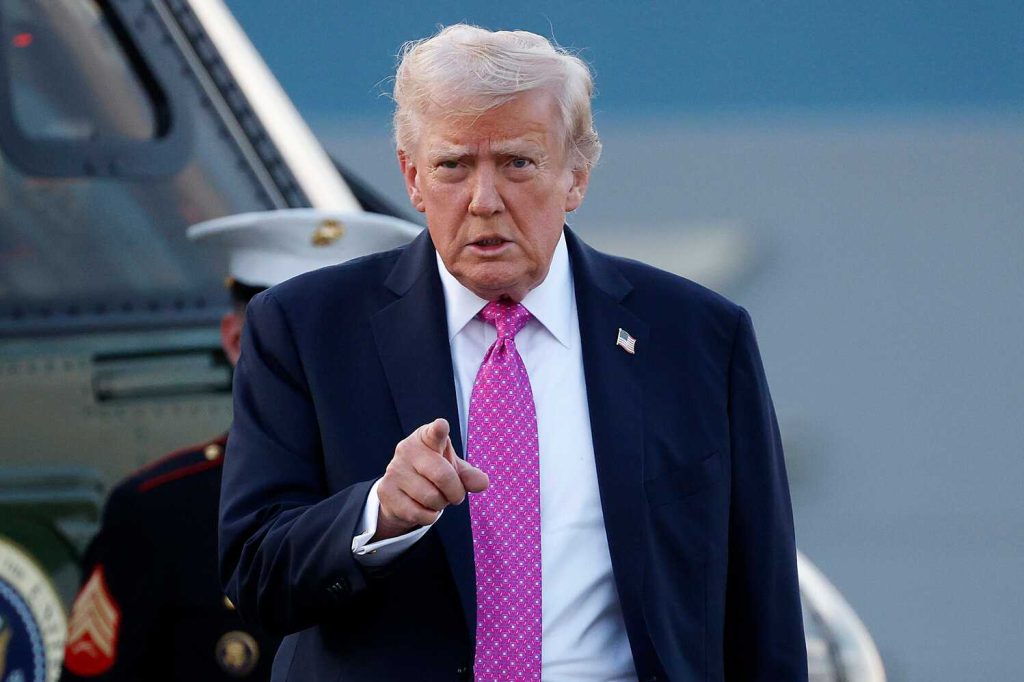
InfoJet is closely monitoring a growing point of tension in global finance that economists say could have serious consequences for markets worldwide. Fresh warnings are emerging over renewed political pressure by former U.S. President Donald Trump on the United States Federal Reserve, raising concerns about the long-standing independence of the world’s most influential central bank.
The Federal Reserve plays a critical role not only in the U.S. economy but across the global financial system. Its decisions on interest rates influence inflation, currency values, stock markets, bond yields, and investment flows around the world. Because of this influence, economists stress that any perception of political interference can quickly shake investor confidence.
Trump’s public criticism of the Federal Reserve and its leadership has reignited fears that monetary policy could be shaped by political interests rather than economic data. Analysts warn that if markets begin to doubt the Fed’s independence, the consequences could extend far beyond U.S. borders. The U.S. dollar serves as the world’s primary reserve currency, while U.S. government bonds are widely regarded as a global safe haven. Any loss of confidence in these pillars could trigger widespread market reactions.
In addition to immediate market concerns, economists are emphasizing the potential long-term consequences of political interference in central banking. Historically, periods in which central banks were perceived as politically influenced often led to prolonged economic instability, higher inflation, and reduced investment confidence. For instance, in the 1970s, similar doubts over central bank independence contributed to the U.S. experiencing stagflation, a combination of stagnant growth and rising inflation, which impacted not only domestic households but also international trade partners.
Global investors rely heavily on the Federal Reserve as a benchmark for assessing the risk and stability of financial markets worldwide. Decisions regarding interest rates, quantitative easing, and liquidity support are closely monitored by governments, multinational corporations, and institutional investors. Any hint that these decisions are being influenced for political reasons could prompt capital flight from vulnerable markets. In practical terms, this means funds may move from emerging economies back to the perceived safety of U.S. treasuries or other low-risk assets, further pressuring developing nations.
The bond markets, often considered one of the most sensitive indicators of financial health, are already reflecting some of this uncertainty. Treasury yields have shown fluctuating patterns, signaling investor concerns about the stability of returns. Meanwhile, gold and other commodities are experiencing renewed demand as a hedge against potential currency devaluation. Analysts warn that if these trends continue, volatility could extend into equity markets globally, impacting stock prices, pensions, and retirement funds in multiple countries.
The ripple effects of such political pressure are particularly notable in emerging and frontier markets. Countries that rely on foreign capital inflows to finance infrastructure projects, government budgets, or business expansion can face higher borrowing costs as investors demand increased risk premiums. For households, this translates to rising loan interest rates, higher utility costs, and inflationary pressures on everyday goods. Economists caution that even countries with strong domestic fundamentals are not immune, as global markets are increasingly interconnected.
Another layer of concern comes from corporate decision-making. Multinational corporations often plan expansion, hiring, and capital allocation based on predictable interest rate environments and currency stability. When markets become unpredictable due to perceived political interference, companies may delay investments, scale back operations, or implement cost-cutting measures. Such actions can slow economic growth and reduce employment opportunities, further compounding the social and economic impact of market volatility.
In addition, the current scenario may affect investor sentiment toward long-term projects and infrastructure development. Uncertainty in monetary policy can influence the rate of return expectations for private investors, potentially discouraging them from engaging in high-capital, long-horizon ventures. Economists highlight that this could have broader implications for technological innovation, energy transition projects, and sustainable development initiatives, which often depend on stable financing environments.
Financial education experts stress that ordinary individuals must understand that global events, even those appearing distant or political, have direct consequences on their daily lives. A shift in U.S. monetary policy or perceived instability in the Federal Reserve can influence interest rates on mortgages, credit cards, auto loans, and student loans. For retirees, fluctuations in investment portfolios and pension funds can affect income security, while for working professionals, sudden price increases in essential commodities can impact household budgets.
Finally, economists recommend that both governments and central banks worldwide prioritize measures to maintain confidence in financial systems. Transparency, clear communication, and adherence to long-standing institutional principles are vital for minimizing the impact of external pressures. By reinforcing independence and stability, central banks can reassure investors and protect economies from avoidable shocks.
InfoJet will continue monitoring this situation closely, providing comprehensive insights into how global financial trends are shaped by political developments. By keeping readers informed, InfoJet aims to equip businesses, investors, and individuals with the knowledge needed to navigate volatile markets and make well-informed financial decisions in an increasingly interconnected world.

Recent market movements suggest investors are already becoming cautious. Demand for safe-haven assets such as gold has increased, while currency markets have shown signs of heightened volatility. Equity markets in several regions have experienced uneven trading as investors reassess risk. Economists note that while these shifts may appear moderate for now, prolonged uncertainty could amplify financial instability.
Emerging and developing economies face particular risks in this environment. When uncertainty surrounds U.S. monetary policy, global investors often retreat from riskier markets. This can lead to weaker local currencies, higher import costs, rising inflation, and increased pressure on government debt. For many countries, especially those dependent on foreign capital, the impact can be swift and painful.
Economists are also concerned about inflationary risks. Political influence over interest rate decisions could delay necessary policy actions or lead to misaligned monetary responses. Over time, this could result in higher inflation, forcing sharper rate hikes later and increasing borrowing costs for households and businesses alike.
For businesses, uncertainty around interest rates complicates long-term planning. Companies rely on stable financial conditions to make decisions about expansion, investment, and employment. When markets become unpredictable, firms may delay spending, reduce hiring, or raise prices to manage risk, slowing overall economic growth.
Ordinary people are not insulated from these effects. Changes in global financial confidence can translate into higher loan rates, more expensive mortgages, unstable pension funds, weaker currencies, and rising living costs. What begins as a policy debate at the top of the financial system can eventually affect daily life.
InfoJet’s analysis highlights a key lesson from financial history. Markets depend on trust, credibility, and institutional independence. When those foundations are questioned, investors respond by demanding higher returns for taking risk, which ultimately raises costs across the economy.
The coming period will be critical. Market participants will be watching how firmly the Federal Reserve maintains its independence and how political rhetoric evolves. Confidence can take years to build but only moments to weaken.
InfoJet Final Take
Central bank independence remains a cornerstone of global financial stability. Any sustained challenge to that independence carries risks that extend far beyond national borders. In an interconnected world, financial uncertainty in one major economy can quickly ripple across global markets.
InfoJet will continue to follow this story closely, providing clear analysis on how global developments shape markets, businesses, and everyday economic realities.
Reporter: Onyeka Evans
About the Author


