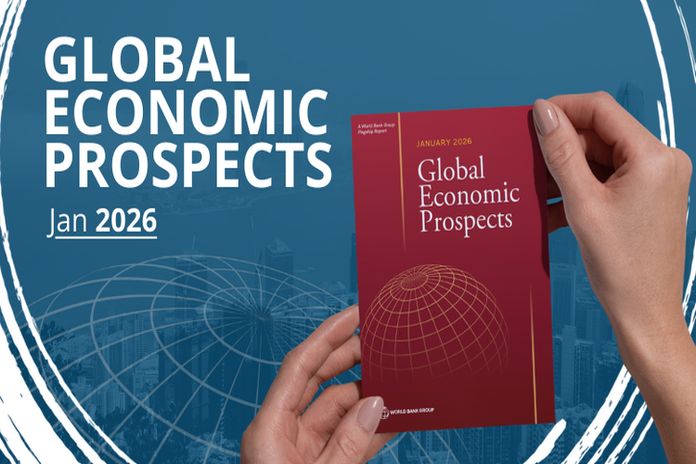
Global Economy Shows Strength in 2026, but Growth Remains Uneven Across Regions
At InfoJet, we track the forces shaping the global economy beyond the headlines — and as 2026 unfolds, one message is becoming increasingly clear: the world economy is proving more resilient than many expected, yet this resilience is far from evenly distributed.
After several years defined by pandemic recovery, geopolitical shocks, inflation surges, and aggressive monetary tightening, the global economy has entered 2026 on a steadier footing. Growth has not collapsed. Financial systems remain largely stable. Consumer demand, while cautious, has not disappeared. However, beneath this surface-level stability lies a deeply uneven economic landscape, where some regions and sectors are accelerating while others continue to struggle for momentum.
A World Economy That Refused to Break
One of the most notable developments heading into 2026 is the global economy’s ability to withstand repeated shocks. Rising interest rates, trade tensions, energy price volatility, and political uncertainty were widely expected to push major economies into deep recessions. Instead, many countries avoided worst-case scenarios.
Advanced economies such as the United States and parts of Europe have shown surprising durability. Labor markets remain relatively strong, unemployment rates have stayed lower than expected, and consumer spending has proven more resilient despite higher borrowing costs. Inflation, though still a concern in some regions, has moderated enough to reduce pressure on households and policymakers.
This resilience has restored a degree of confidence among investors and businesses, helping to stabilize financial markets and encourage selective investment. Yet resilience does not equal rapid growth — and that distinction defines the economic outlook of 2026.
Growth Exists, but It Is Slower and Uneven
Global growth projections for 2026 suggest modest expansion rather than a robust boom. While the world economy is moving forward, it is doing so at a slower pace compared to pre-pandemic trends. More importantly, growth is highly uneven across regions, income levels, and industries.
Advanced economies are largely leading the recovery. Countries with diversified economies, strong institutions, and access to capital have adapted more quickly to higher interest rates and structural shifts. In contrast, many developing and emerging economies face mounting challenges, including high debt burdens, currency pressure, and limited fiscal space.
This divergence is creating a two-speed global economy — one where wealthier nations consolidate stability while poorer nations struggle to catch up.
The Role of Interest Rates and Monetary Policy
Central banks remain a central force shaping the global economic environment in 2026. After years of aggressive rate hikes aimed at controlling inflation, many policymakers are now walking a fine line between maintaining price stability and avoiding economic stagnation.
In several advanced economies, interest rates remain elevated, keeping borrowing costs high for businesses and consumers. While this has helped tame inflation, it has also slowed investment and housing activity. Small and medium-sized enterprises, in particular, continue to feel the pressure of tighter credit conditions.
Emerging markets face an even tougher balancing act. High global interest rates have increased debt servicing costs, reduced access to foreign capital, and placed pressure on local currencies. For these economies, resilience often means survival rather than expansion.
Trade, Geopolitics, and Fragmentation
Another defining feature of the global economy in 2026 is the ongoing shift in global trade patterns. While globalization has not collapsed, it is clearly evolving.
Geopolitical tensions, trade disputes, and national security concerns are pushing countries to rethink supply chains. Many governments and corporations are prioritizing resilience over efficiency, leading to “friend-shoring,” regional trade blocs, and localized manufacturing.
For some economies, particularly those positioned as manufacturing or logistics hubs, this shift presents new opportunities. For others, especially export-dependent developing nations, trade fragmentation introduces uncertainty and risk.
At the same time, global trade growth remains subdued compared to historical averages, limiting one of the traditional engines of economic expansion.
Technology and Investment: A Bright Spot with Limits
Technology continues to be one of the strongest pillars of global economic resilience. Investment in artificial intelligence, automation, digital infrastructure, and clean energy remains strong, especially in advanced economies and innovation hubs.
AI-driven productivity gains, digital financial services, and e-commerce are reshaping industries and creating new economic value. These sectors are attracting capital even as traditional industries face slower growth.
However, the benefits of technological progress are not evenly shared. Many developing economies lack the infrastructure, skills, and investment needed to fully participate in the digital transformation. As a result, technology is widening — rather than narrowing — global economic disparities.
Energy Markets and Climate Pressures
Energy dynamics continue to influence the global economy in 2026. While energy prices are more stable than during recent crises, volatility remains a constant risk.
Countries investing heavily in renewable energy and energy diversification are better positioned to manage costs and reduce exposure to external shocks. Meanwhile, economies reliant on energy imports or fossil fuel exports face long-term uncertainty as the global energy transition accelerates.
Climate-related risks — including extreme weather, food supply disruptions, and infrastructure damage — are also becoming more economically significant. These pressures disproportionately affect lower-income countries, further contributing to uneven global growth.
Debt, Inequality, and Social Strain
One of the most pressing challenges underlying the global economy’s uneven growth is debt. Public and private debt levels remain high across many regions, limiting governments’ ability to invest in growth, healthcare, education, and infrastructure.
For households, rising living costs and stagnant wages in some economies are fueling inequality and social tension. While headline economic indicators may suggest stability, millions of people continue to feel financially insecure.
This disconnect between macroeconomic resilience and everyday economic reality is shaping political and social debates worldwide, influencing elections, policy decisions, and public trust in institutions.
What This Means for Businesses and Investors
For businesses, the global economic outlook in 2026 demands adaptability. Companies operating in resilient regions may find opportunities for expansion, innovation, and strategic investment. However, success increasingly depends on navigating regional differences, regulatory shifts, and supply chain complexity.
Investors, meanwhile, are becoming more selective. Capital is flowing toward sectors and markets perceived as stable, innovative, and future-oriented — particularly technology, healthcare, clean energy, and digital finance. At the same time, risk tolerance for fragile economies and traditional industries is declining.
The era of broad, synchronized global growth appears to be over, at least for now. Instead, economic performance will be shaped by local conditions, policy choices, and structural strengths.
Looking Ahead: Stability Without Comfort
As 2026 progresses, the global economy’s resilience offers reassurance — but not comfort. Stability has been achieved at the cost of slower growth, persistent inequality, and widening regional divides.
The key question moving forward is whether policymakers can turn resilience into inclusive growth. That will require smarter fiscal strategies, targeted investment, debt relief mechanisms, and international cooperation at a time when global trust is fragile.
At InfoJet, we will continue to monitor how these economic forces evolve, spotlighting not just where growth exists, but who benefits from it — and who risks being left behind.
The global economy may be standing strong in 2026, but its foundations remain uneven. How the world responds to this imbalance will define the next chapter of global economic history.
Reporter: Onyeka Evans
About the Author


