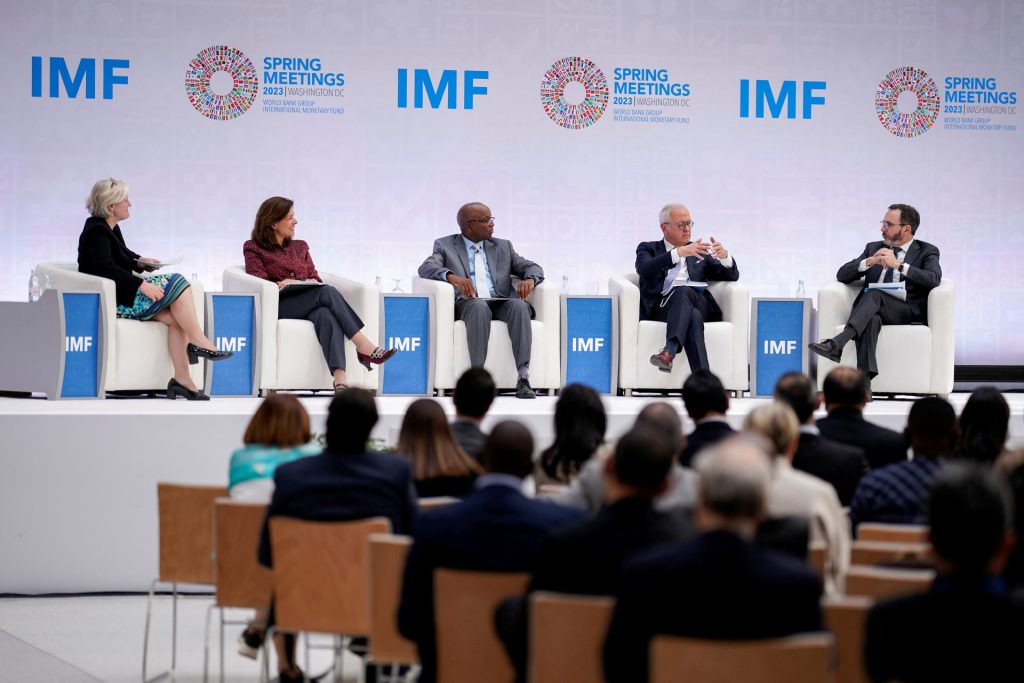
IMF Warns US Tariff Threats Could Trigger Global Economic Slowdown
By InfoJet Business Desk — Updated January 2026
Reporter: Dr Peter Asika
IMF Warns US Tariff Threats Could Trigger Global Economic Slowdown
The International Monetary Fund has raised serious concerns over growing tariff threats coming from the United States, warning that continued trade tensions could negatively affect the global economy. According to the IMF, these threats are not just political statements but real economic risks that could slow growth, weaken investment, and unsettle financial markets across the world.
The warning was issued as part of the IMF’s ongoing assessment of global economic conditions, at a time when many countries are still struggling with high inflation, rising debt, and uneven recovery from recent global shocks. The fund stressed that the world economy remains fragile and that aggressive trade policies could worsen existing problems.
How IMF Issued the Warning
The IMF’s warning was delivered through a combination of official statements, public speeches, and economic briefings tied to its global outlook reviews. These comments were made during international economic meetings and interviews where IMF officials discussed the risks facing the global economy in 2026.
Rather than announcing a single emergency statement, the IMF used its usual approach by embedding the warning within broader economic analysis. This method allows the fund to explain not only what could go wrong but also why policymakers should be concerned and how damage can be avoided.
The message was clear. While global growth has not collapsed, it is vulnerable. Any major escalation in trade disputes, especially involving the world’s largest economy, could easily disrupt supply chains, raise costs, and weaken confidence.
The warning was led by the IMF’s Managing Director, Kristalina Georgieva, who is the highest-ranking official at the institution. Speaking on the global outlook, Georgieva explained that increasing tariff threats add uncertainty to an already complex economic environment.
She pointed out that businesses make long-term decisions based on stability and predictability. When governments threaten to impose or increase tariffs, companies often delay investments, reduce expansion plans, and cut back on hiring. According to her, this hesitation alone can slow economic growth, even before any tariff is officially implemented.
The IMF’s Chief Economist, Pierre-Olivier Gourinchas, also reinforced the warning. He noted that trade tensions between major economies have historically reduced global output and warned that repeating such patterns could harm growth projections for 2026 and beyond. Gourinchas emphasized that modern economies are deeply connected, meaning trade disruptions in one region quickly affect others.
Why Tariffs Are a Big Deal Globally
Tariffs are taxes placed on imported goods. Governments often use them to protect local industries or respond to trade imbalances. However, the IMF explains that tariffs rarely affect only one country.
When a country like the United States raises tariffs, importers pay more to bring goods into the country. These higher costs are often passed on to consumers through increased prices. At the same time, other countries may respond by placing their own tariffs, creating a cycle of retaliation.
The IMF warns that this cycle can reduce international trade, increase inflation, and weaken global demand. For developing countries, the impact can be even more severe, as they rely heavily on stable global trade to support growth and employment.
What Triggered the IMF’s Concern
The IMF’s warning follows renewed discussions around tougher US trade policies and tariff threats against multiple trading partners. While some of these measures are still under consideration, the rhetoric alone has been enough to unsettle markets.
Investors, manufacturers, and exporters are closely watching policy signals coming from Washington. The IMF noted that even the possibility of higher tariffs forces businesses to rethink supply chains and future investments. This uncertainty is one of the biggest risks to global economic stability.
According to the fund, trade threats coming at a time of geopolitical tension make the situation more dangerous. Combined with conflicts, energy market disruptions, and high borrowing costs, tariffs could push some economies into slower growth or recession.
Global Growth Still Holding, But Risks Are Rising
Despite the warning, the IMF has not declared an immediate global crisis. Its projections still show moderate global growth in 2026, supported by strong activity in technology, artificial intelligence investment, and resilient consumer spending in some regions.
However, the IMF made it clear that this growth is uneven and fragile. Some economies are growing fast, while others are barely expanding. Trade disruptions could easily widen this gap.
The fund also warned that global debt levels remain high. If tariffs increase inflation and slow growth at the same time, governments may find it harder to manage their finances. This could lead to higher borrowing costs and reduced public spending in many countries.
Possible Effects If Tariff Threats Continue
The IMF outlined several consequences that could follow if tariff threats turn into full-scale trade actions.
First, global investment could slow down. Businesses prefer stable environments, and uncertainty discourages long-term planning. This affects job creation and economic expansion.
Second, consumer prices could rise. Tariffs increase the cost of imported goods, which often leads to higher prices for everyday items. This can reduce purchasing power and worsen inflation, especially in countries already struggling with high living costs.
Third, financial markets could become more volatile. Trade tensions often lead to sharp movements in stock markets, currencies, and commodities. This volatility can reduce investor confidence and trigger capital outflows from emerging markets.
Finally, the risk of retaliation remains high. If one country raises tariffs, others are likely to respond. The IMF warns that such cycles rarely produce winners and often leave the global economy worse off.
IMF’s Advice to World Leaders
The IMF did not only warn of risks. It also offered guidance.
The fund urged countries to prioritize dialogue over confrontation and to resolve trade disagreements through negotiation. It emphasized the importance of maintaining open trade channels and strengthening international cooperation.
According to the IMF, multilateral institutions and trade agreements remain essential for global stability. Abandoning these frameworks in favor of unilateral actions could increase uncertainty and reduce long-term growth.
The IMF also encouraged governments to support their economies through smart fiscal and monetary policies, especially if external shocks occur.
What This Means for Businesses and Investors
For businesses, the IMF’s warning serves as a signal to prepare for uncertainty. Companies are advised to diversify supply chains, reduce reliance on single markets, and stay informed about policy developments.
Investors are also encouraged to assess risks carefully. Trade tensions can quickly affect asset prices, currencies, and interest rates. The IMF suggests that risk management and diversification will be crucial in navigating the coming months.
InfoJet Insight
In simple terms, the IMF is saying this: the world economy is moving forward, but it is walking on thin ice. Trade threats, especially from powerful economies, could crack that ice if not handled carefully.
For readers, businesses, and policymakers, the message is clear. Stability matters. Cooperation matters. And decisions made by a few powerful countries can shape economic outcomes for billions of people worldwide.
As global trade discussions continue, the IMF’s warning stands as a reminder that economic growth depends not just on numbers, but on trust, cooperation, and responsible policy choices.
About the Author


